Tour Guides · Academies
Living at a La Liga Academy for a Week: How Residential Training Programs Work for Visiting Youth Teams
By Juan Sánchez · 16 July 2026 · The Spanish Football Desk
La Liga · Transfers · The Youth Game · for US soccer coaches
By Juan Sánchez · 16 July 2026 · The Spanish Football Desk
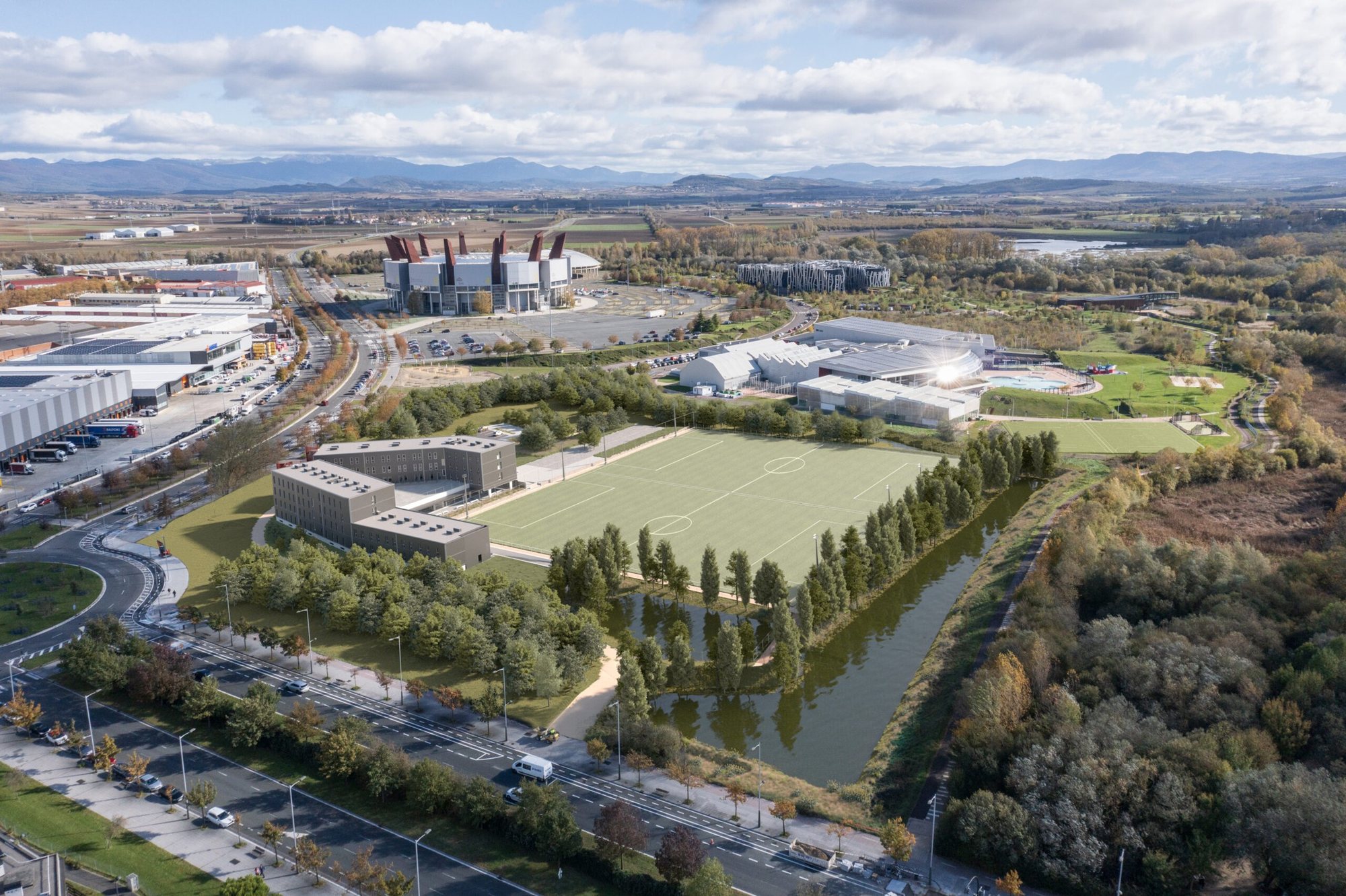
A new shape of Spain trip is emerging for US youth clubs: live at a professional club's academy for a training week, then roll straight into an international tournament. Here is how the residential model works, what it fixes, and a look at the program that pairs the Alavés academy in Vitoria with the Costa Daurada Cup.
Most American youth teams that train in Spain do it as commuters. The group sleeps in a hotel, rides a coach to a professional club's training ground, does its session, and rides back. It works, and it is how the majority of Spain tours run, including many good ones. But there is a second model that Spanish clubs have quietly opened up in recent years, and it changes the texture of the trip completely: the residential week, where a visiting team does not visit the academy but lives inside it.
The idea is simple to say and rare to find. A professional club's academy has a residence, because its own cantera players from outside the city live there during the season. In the summer window, when the domestic season is over, some of those residences host visiting teams. The group sleeps where the academy players sleep, eats where they eat, and walks out the door onto the same pitches, with the club's own coaching staff running the sessions. For a coaching staff from the US, it is the difference between touring Spanish player development and briefly joining it.
The commuter model has two quiet costs. The first is time: a hotel across the city means every session carries forty minutes of coach travel each way, and over a week that adds up to most of a training day lost to traffic. The second is immersion. Players who train at an academy for two hours and then return to a hotel with a pool have had a nice excursion. Players who are still at the academy at dinner, who see the facility at night, whose whole day is organized around the rhythm of the place, absorb something else. The residential week removes the commute entirely and replaces hotel time with academy time. Nobody has invented a faster way to make a group of fifteen-year-olds take a training week seriously.
There is a third benefit that coaches notice by day two. Because the group lives on site, the Spanish coaching staff sees them between sessions, not just during them. Corrections carry over from the morning to the afternoon. The sessions build on each other the way a real training week does, rather than resetting each day. It is closer to a preseason camp than a tour stop.
The clearest current example is a new eleven-day program built around the Baskonia Alavés Academy in Vitoria-Gasteiz, the shared academy campus of Deportivo Alavés, the La Liga club, and Baskonia, the EuroLeague basketball side. Visiting squads spend four nights living at the academy residence, with on-pitch sessions led by Deportivo Alavés coaching staff, a visit to Mendizorroza, the club's home ground since 1924, and a friendly against local Basque opposition to close the week. The program is run by Odisea Tours, the Spanish group-tour operator that publishes this desk, and the full day-by-day is on the program page, with a longer operator's account of how it was built on the Odisea journal.
The usual disclosure applies twice over here. First, the commercial one: Odisea is this publication's sponsor, and you should read this guide knowing that. Second, the factual one, which any honest operator should volunteer: these are organized training experiences for visiting teams, arranged through the academy. They are not an official partnership with a La Liga club, and any operator anywhere who implies your under-15s are joining the Alavés cantera is selling you something that does not exist. What is real, and what is worth the trip, is the environment: the residence, the pitches, the club's coaching staff, and a week of living inside a professional development structure.
The other structural idea in that program is the order of its two halves. The training week comes first, in Vitoria. Then the group travels south, with an overnight in Zaragoza to break the 500 kilometres, and plays the Costa Daurada Cup, an international youth tournament on the Catalan coast around Salou, Cambrils and La Pineda: opening ceremony, group stage, knockouts and finals across roughly three days in late June, with teams from across Europe and beyond.
Any coach who has taken a team to an international tournament straight off a transatlantic flight knows why this order matters. Jet-lagged squads play their group stage at half speed and find their legs just in time to go home. Put five days of professional coaching and a friendly in front of the tournament and the squad that walks into its first group-stage fixture is match-sharp, acclimatized and already used to Spanish tempo. The tournament stops being the thing the trip recovers from and becomes the thing the trip builds toward.
If the residential model appeals, the questions that separate a real program from a brochure are specific. Who exactly runs the sessions, the club's coaching staff or a subcontracted camp company wearing the club's colors? How many sessions are confirmed, and will the operator put the count and the times in writing before you pay? Where does the group actually sleep, the academy residence or a hotel described creatively? Is there a real fixture against local opposition, with the opponent's age group confirmed? And if a tournament is attached, is your team's entry registered and guaranteed, or subject to availability? A serious operator answers all five in writing without being chased. Anything vaguer than that is a red flag, and we have written before about how to read a Spain tour itinerary with an operator's eye.
Residential academy weeks are still the exception in the US-to-Spain tour market, partly because residence beds are scarce and partly because they only work in the summer window when the cantera players are away. Commuter-model tours through Madrid, Valencia and Barcelona remain the default first trip, and for a group that wants stadiums, a La Liga match night and a taste of several cities, they are still the right call. The residential week is the second-trip shape, or the first trip for a club whose coaches care more about the training block than the sightseeing. It rewards squads, roughly U12 to U18, that can handle a schedule where soccer is the point of every day, and it pairs naturally with a tournament, which supplies the competition a training week otherwise lacks.
For a US coach weighing options for summer 2027, the honest summary is this: the commuter tour shows your players Spanish football. The residential week makes them live inside it for a while, and the ones we have watched come home from it talk about the residence corridor and the dinner hall as much as the sessions. That is usually the sign a trip did what it was supposed to do.
Yes, in the summer window. Some Spanish professional academies host visiting teams at their residences once their own cantera players leave for the off-season. The clearest current example is the Baskonia Alavés Academy in Vitoria-Gasteiz, where visiting squads on the Odisea Tours program live at the academy residence for four nights with on-pitch sessions led by Deportivo Alavés coaching staff. These are organized training experiences arranged through the academy, not an official club partnership.
The Costa Daurada Cup is an international youth football tournament played on Catalonia's Costa Daurada, the coastal strip around Salou, Cambrils and La Pineda south of Barcelona. It runs an opening ceremony, a group stage, then knockout rounds and finals across roughly three days in late June, with youth teams from across Europe and beyond. On the combined program covered in this guide, the tournament follows a training week in Vitoria, so visiting squads arrive match-sharp.
It depends on what the group wants. A classic commuter-model tour through Madrid, Valencia and Barcelona gives a team stadiums, a La Liga match night and several cities, and remains the best first trip for most clubs. A residential week trades breadth for depth: fewer cities, more training, and total immersion in one professional environment. It suits competitive squads that prioritize development, and it works best when paired with a tournament that supplies real competition after the training block.
Spanish football, in English, in your inbox every week.
The week in La Liga, transfers and the youth game, written for US soccer coaches. One email, no noise.